
Two kinds of packaging, and both count
Packaging is wider than most stores expect. Two kinds count, and both go into your reports.
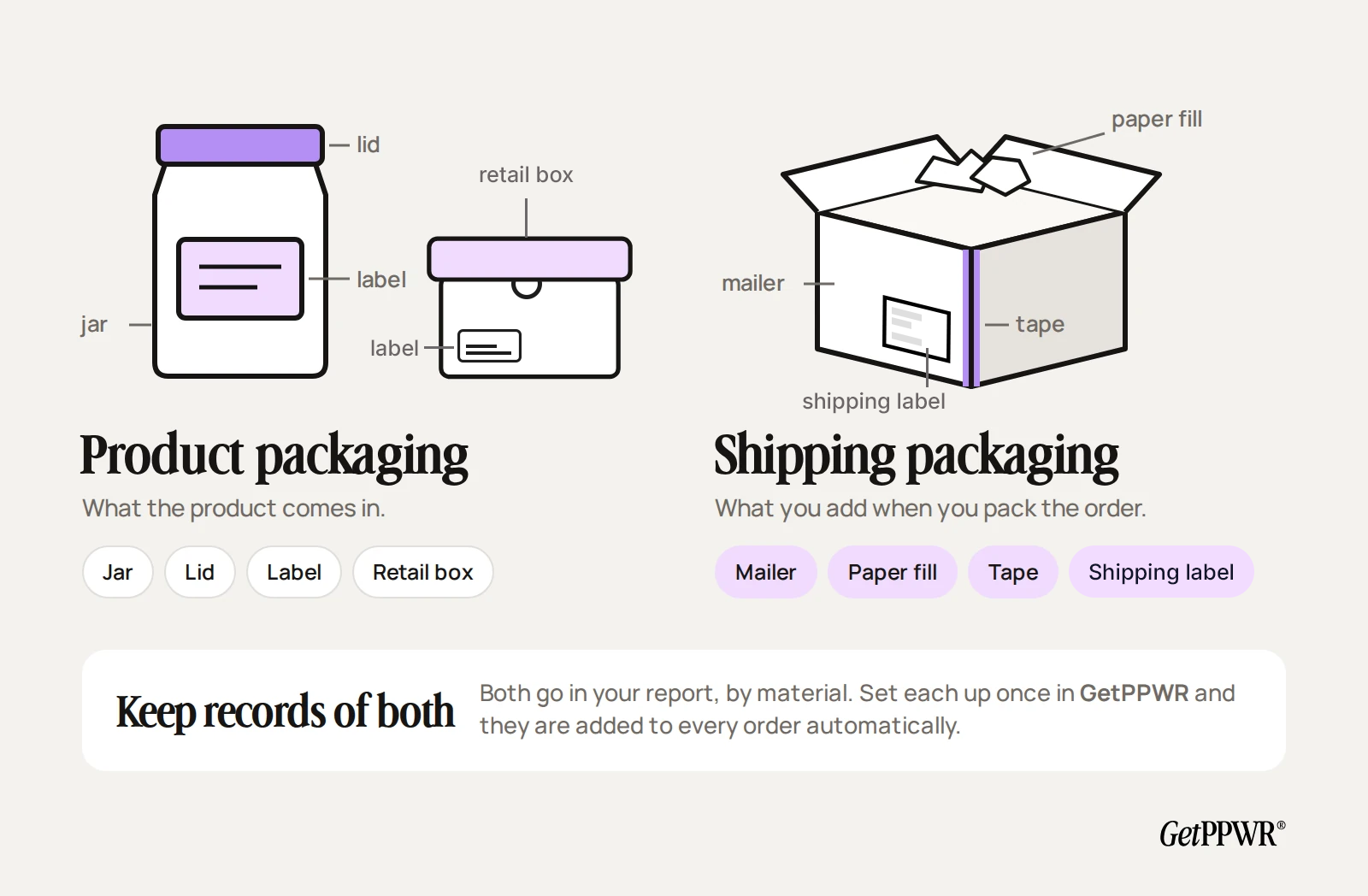
- Product packaging is what the product comes in. The jar, the lid, the label, the retail box.
- Shipping packaging is what you add when you pack the order. The mailer, the carton, the tape, the paper fill and the shipping label.
Shipping packaging is the one stores forget. It is not part of the product, but it is still packaging, and it is reported the same way. The address label on the outside counts too.
It is reported by material, not as one weight
A 200 ml candle jar is not 195 grams of packaging. It is 180 g of glass, 12 g of aluminium and 3 g of paper, and every register wants those three numbers separately.
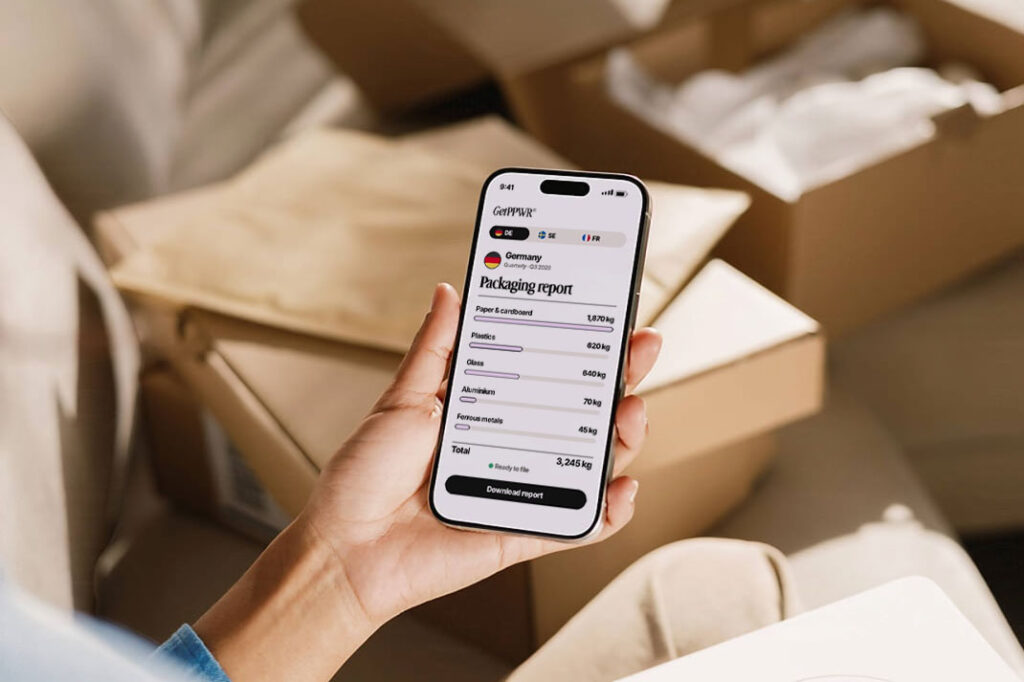
The same goes for the parcel around it. Cardboard, plastic tape and paper fill are three lines, not one. This is why a single weight on a packing slip is never enough. GetPPWR records both kinds of packaging on every Shopify order and splits them by material for you.
Which of it is yours to report?
Not all of it. One rule decides: whoever first puts packaging on a country’s market is the one who reports it there.
- You filled it, assembled it, printed it or imported it. You report it at home.
- You shipped the order to another EU country. You report it in that country.
- It came from a local supplier and stays in your country. They already reported it, so you leave it out.
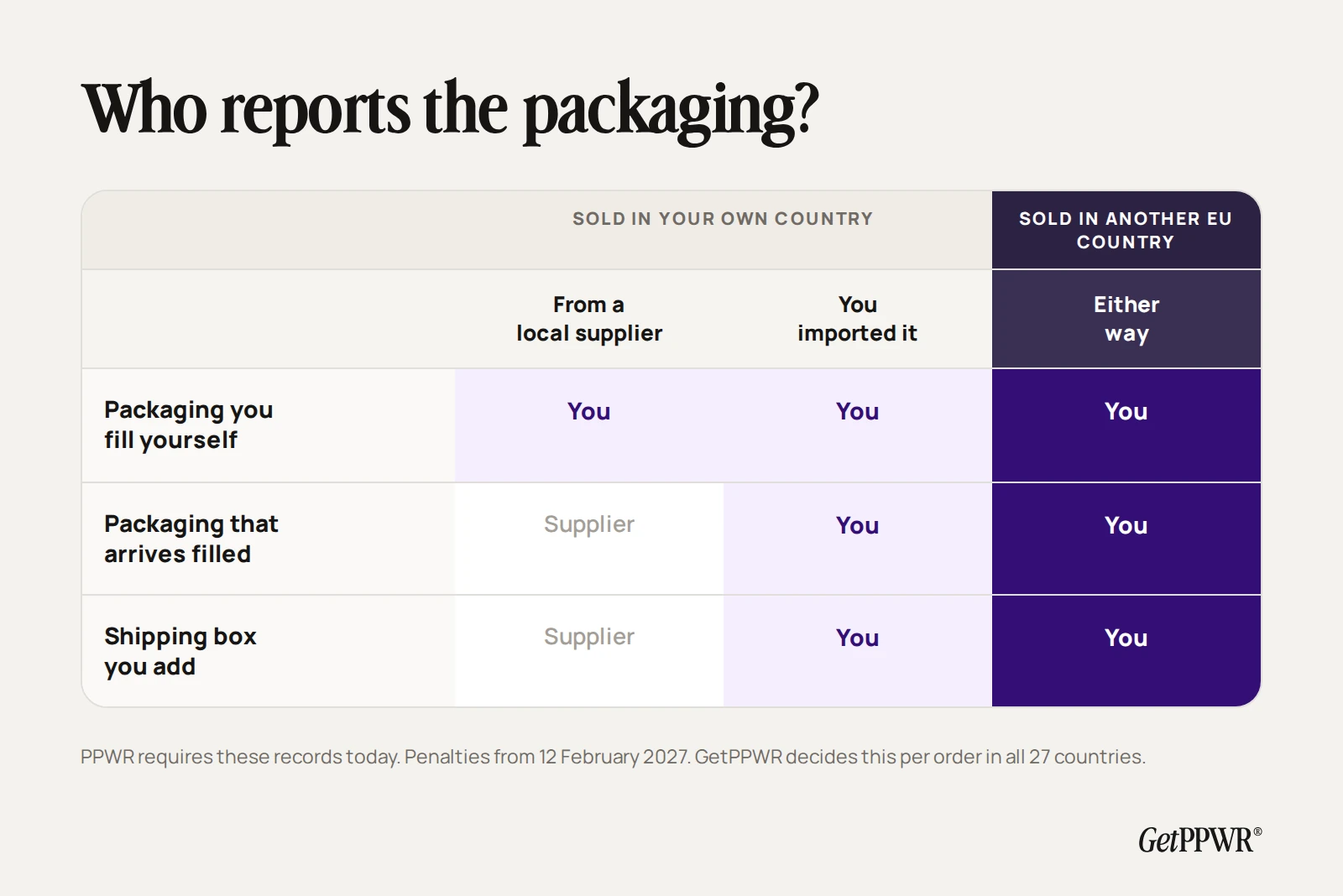
This is not a future obligation. PPWR has required these records since 12 August 2026, and by 12 February 2027 every EU country must have its penalties in place. GetPPWR applies the rule per order and per material, so it is never a judgement call you have to make at the packing table.
Producer or reseller?
That rule is easier to apply once you know which of the two you are. Most stores are one or the other, and plenty are both.
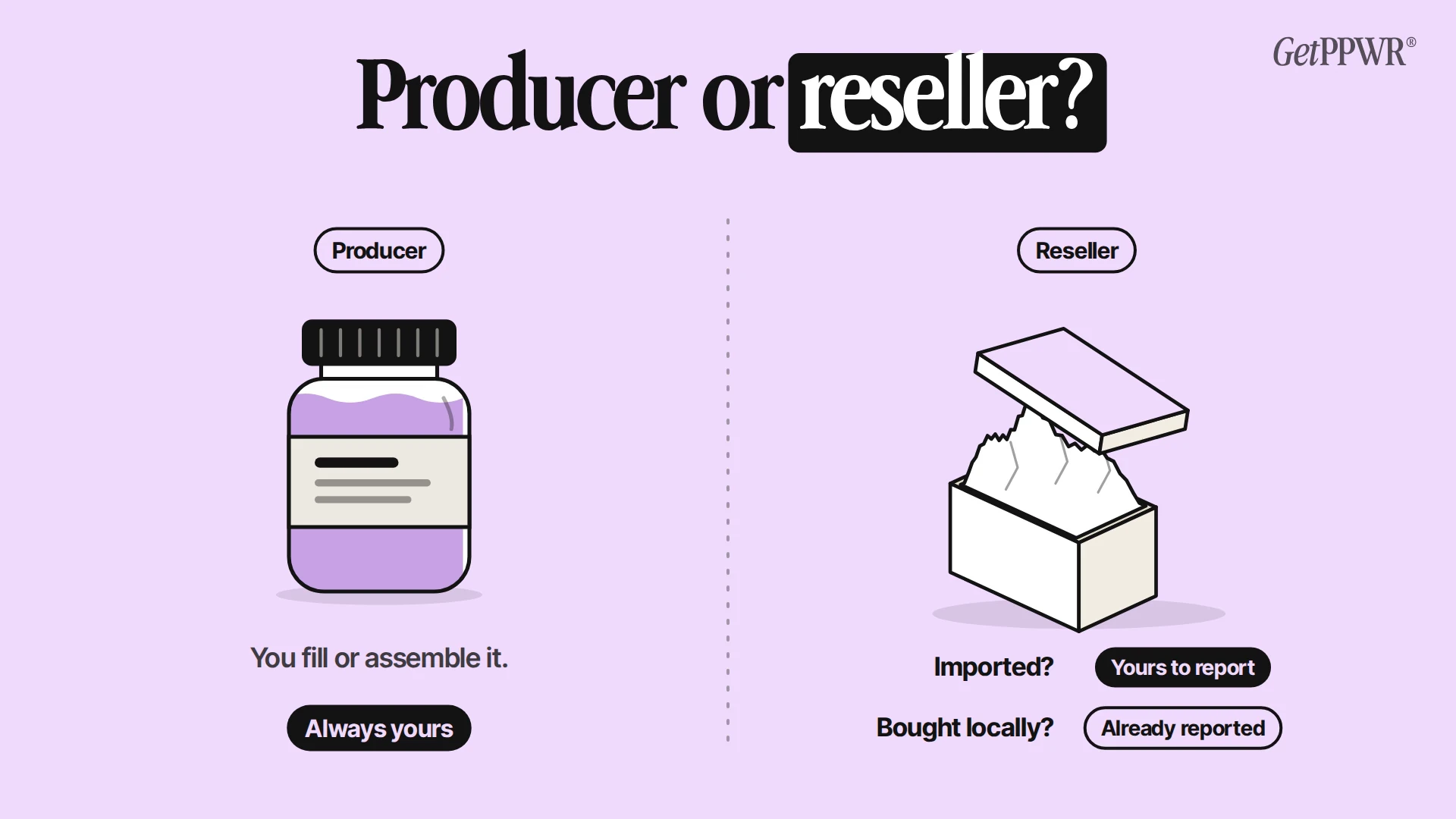
You are a producer when you fill or assemble the packaging yourself. The jar you fill, the box you pack a gift set into, the label you print. That packaging is always yours to report, wherever you bought the empty parts and wherever the order goes.
You are a reseller when you sell products that arrive already packaged. Then it depends on where they came from. Import them yourself and the packaging is yours to report. Buy them from a supplier in your own country and that supplier has already reported it.
A shop that pours its own candles and also resells other brands is both at once. The two halves are simply counted separately, product by product.
Why the box can be your supplier’s and the jar never is
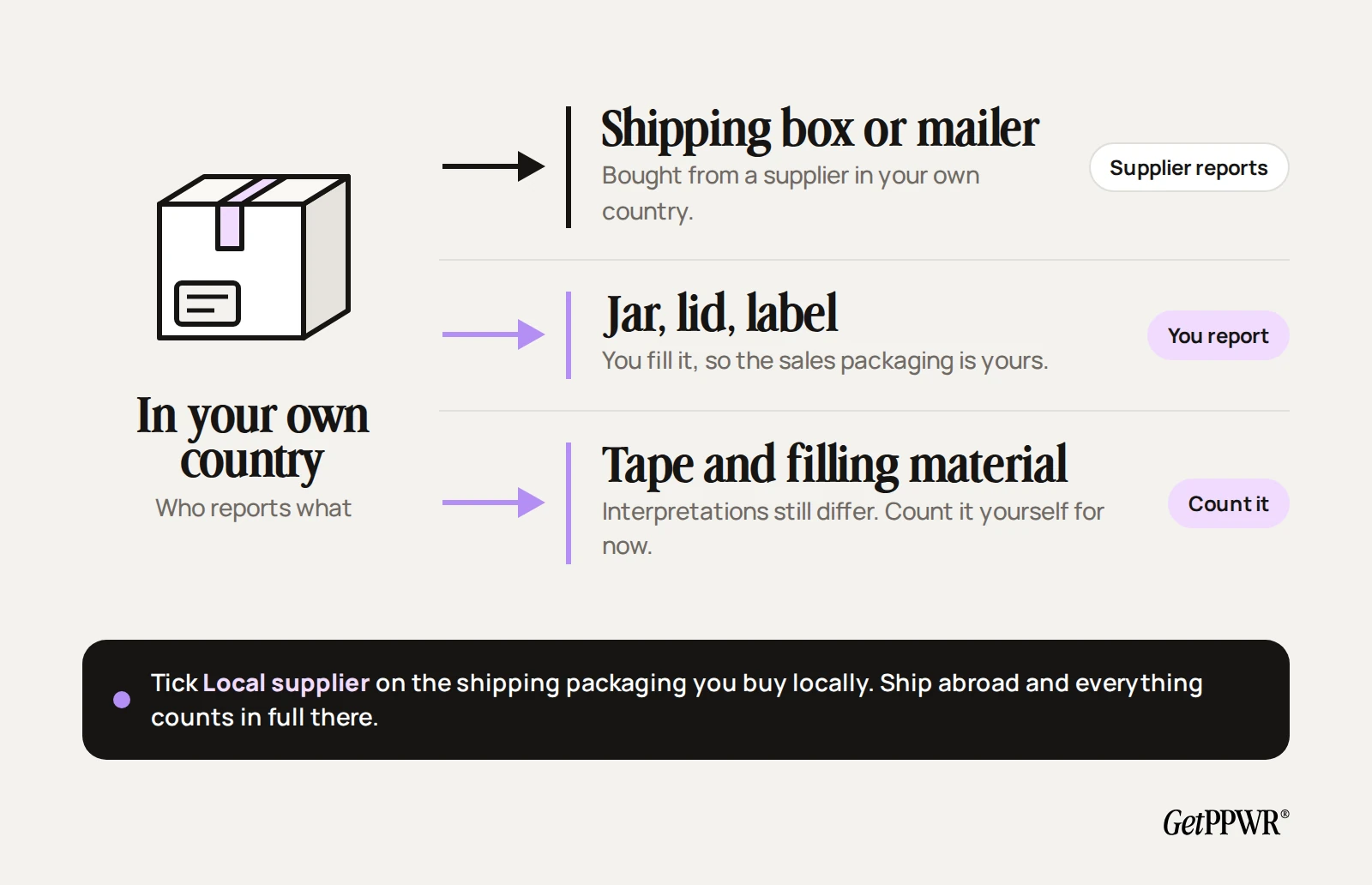
Under PPWR, packaging belongs to whoever first puts it on a country’s market. For shipping boxes that is your supplier, not you. They sold the empty box. The Commission confirmed this in August 2026, and e-commerce mailers count as shipping packaging.
That holds only if the supplier is in your own country. Import the boxes yourself and nobody put them on that market before you, so they are yours. Ship the order abroad and they are yours there too.
The jar is the opposite, with no condition. An empty jar is not finished packaging until you fill it, and filling it makes you its manufacturer. It is yours wherever you bought it and wherever the order goes. The same applies to anything carrying your brand, even a standard item you did not design.
An empty shipping box is already finished packaging. An empty jar is not, until you fill it.
| Packaging | Where you bought it | Who reports it at home |
|---|---|---|
| Shipping box, mailer, rigid transport packaging | A supplier in your own country | Your supplier |
| Jar, lid, label, product box you fill | Anywhere | You |
| Tape, filling material and other flexibles | A supplier in your own country | Disputed, see below |
| Anything you import yourself | Outside your country | You, as the first link in your home market |
Tape and filling material are still disputed
For flexible materials the interpretations do not match yet. The Commission points at the upstream supplier. The national packaging registers, including Germany’s ZSVR, point at the company that applies the material. For rigid transport packaging both roads lead to the same place.
Until that settles, count your tape and fill yourself. Reporting a few hundred grams too much costs cents. Reporting nothing where an authority expected something costs more.
Imported packaging is always yours
Buy your mailers from another country and nobody has put them on your home market before you. You are the first link in the domestic chain, so you report them. The same goes for packaging you bring in from outside the EU, and for products that arrive already packaged from an overseas supplier.
What changes when you ship abroad
Everything above is about your own country. Ship the same parcel to another EU country and you are the first to put the whole parcel on that market. All of it counts there: the product packaging, the box, the tape, the fill. The local supplier rule stops at the border.
Filing in those countries works differently from filing at home, and that is a subject of its own. We cover it in PPWR reporting explained.
GetPPWR does this split for you
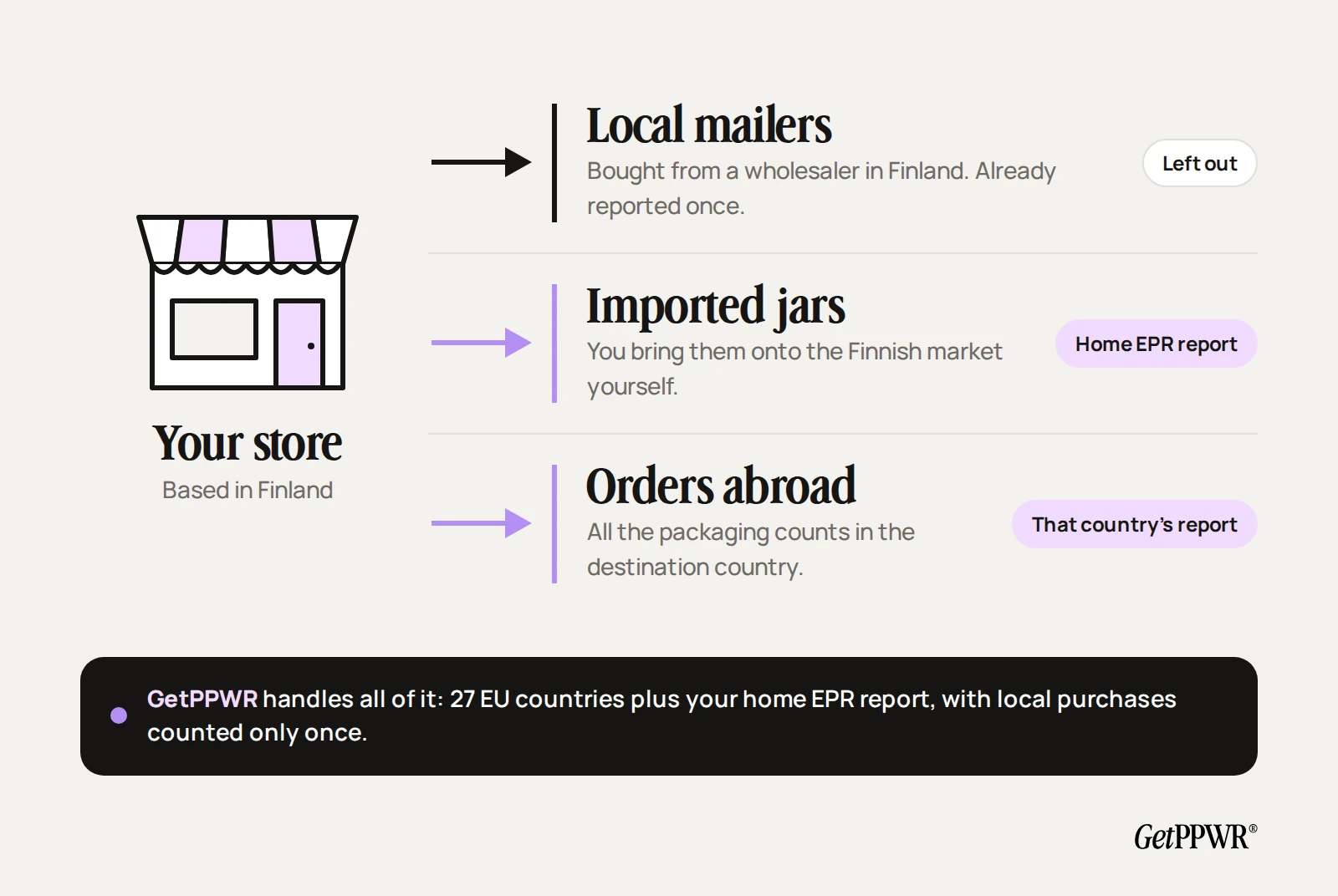
You describe your packaging once with automations, and GetPPWR adds it to every order. The split between what is yours and what is your supplier’s comes down to one tick per material.
- Tick Local supplier on your shipping packaging when you buy it from a supplier in your own country. GetPPWR leaves it out of your home EPR report and keeps it in every export report.
- Leave product packaging unticked. Jars, lids, labels and product boxes stay in your report, because you fill them.
- Leave tape and filling material unticked until your country’s register says otherwise.
- Untick anything you start importing. Change the supplier, change the tick.
Your home country comes from your Shopify settings, so the split happens per country without you maintaining two sets of numbers. GetPPWR then writes each country’s report in the format that country wants, including for orders you have already shipped. That covers all 27 EU countries you ship to, plus your home country’s EPR report. Our friends at Lizenzero can file them for you, and every plan starts with a 7-day free trial.
New to all this? Start with PPWR explained simply. Not sure which countries you are responsible in? Take the 2-minute quiz.
Sources: Regulation (EU) 2025/40, Article 3(1)(15); the European Commission’s PPWR guidance and its August 2026 FAQ; Finland’s environmental authority on the producer definition; Germany’s Central Agency Packaging Register.
Quick answers about what counts as your packaging
Does the shipping box count as packaging?
Yes. Mailers, cartons, tape, fill and the shipping label are all packaging. Whether you report them is a separate question.
Am I a producer or a reseller?
You are a producer for anything you fill or assemble yourself, and a reseller for products that arrive already packaged. Many stores are both, and the two are counted separately.
Do I report boxes from a local wholesaler?
Not in your home country. The supplier of the empty box is the producer of it there. In every other country you ship to, it is yours.
Do I report jars from a local supplier?
Yes. You fill them and sell the product, so the sales packaging is yours, wherever the empty jars came from.
What about tape and filling material?
Interpretations differ between the Commission and the national registers. Count them yourself until your register says otherwise.
What if I import my boxes?
Then you report them. You are the first company to make them available in your home market.
Does this apply when I ship abroad?
No. In the destination country you are the one putting the whole parcel on the market, so everything in it counts there.