

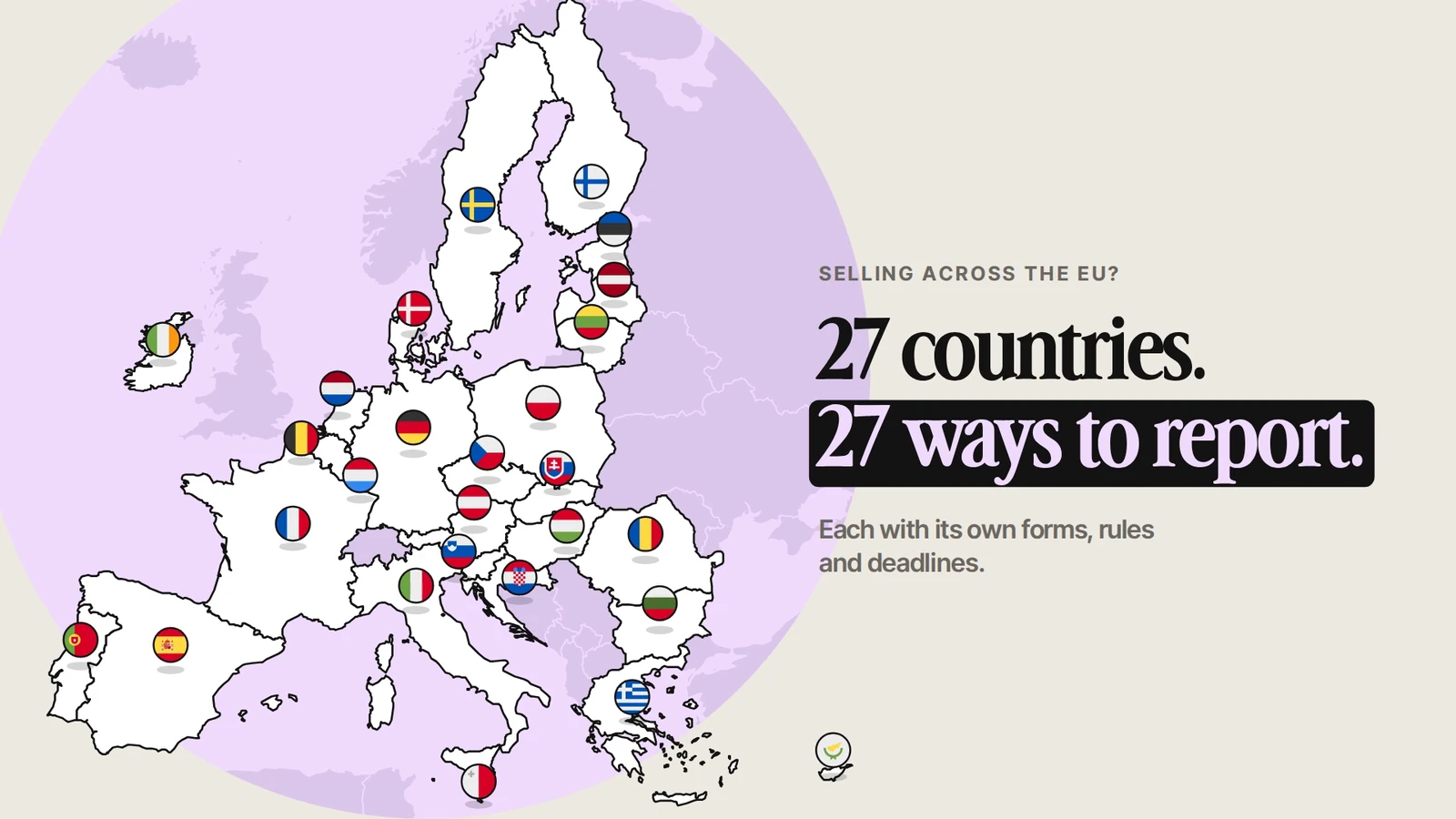
27 countries, 27 ways to report
PPWR is one EU regulation, but there is no one EU report. Every country you sell into collects its own, on its own form, in its own units, on its own deadline. Ship to six countries and you have six reports to produce, not one with six columns.
That is not a transition problem that will tidy itself up soon. The implementing act that is meant to harmonise the producer registers was due on 12 February 2026 and has still not been adopted, so registration and reporting stay country by country, on national formats, for now.
What stays constant is the rule underneath: whoever first puts packaging on a country’s market reports it there. Everything on this page follows from that one sentence. If you are not sure which packaging that covers, start with what counts as your packaging.
At home, you file it yourself
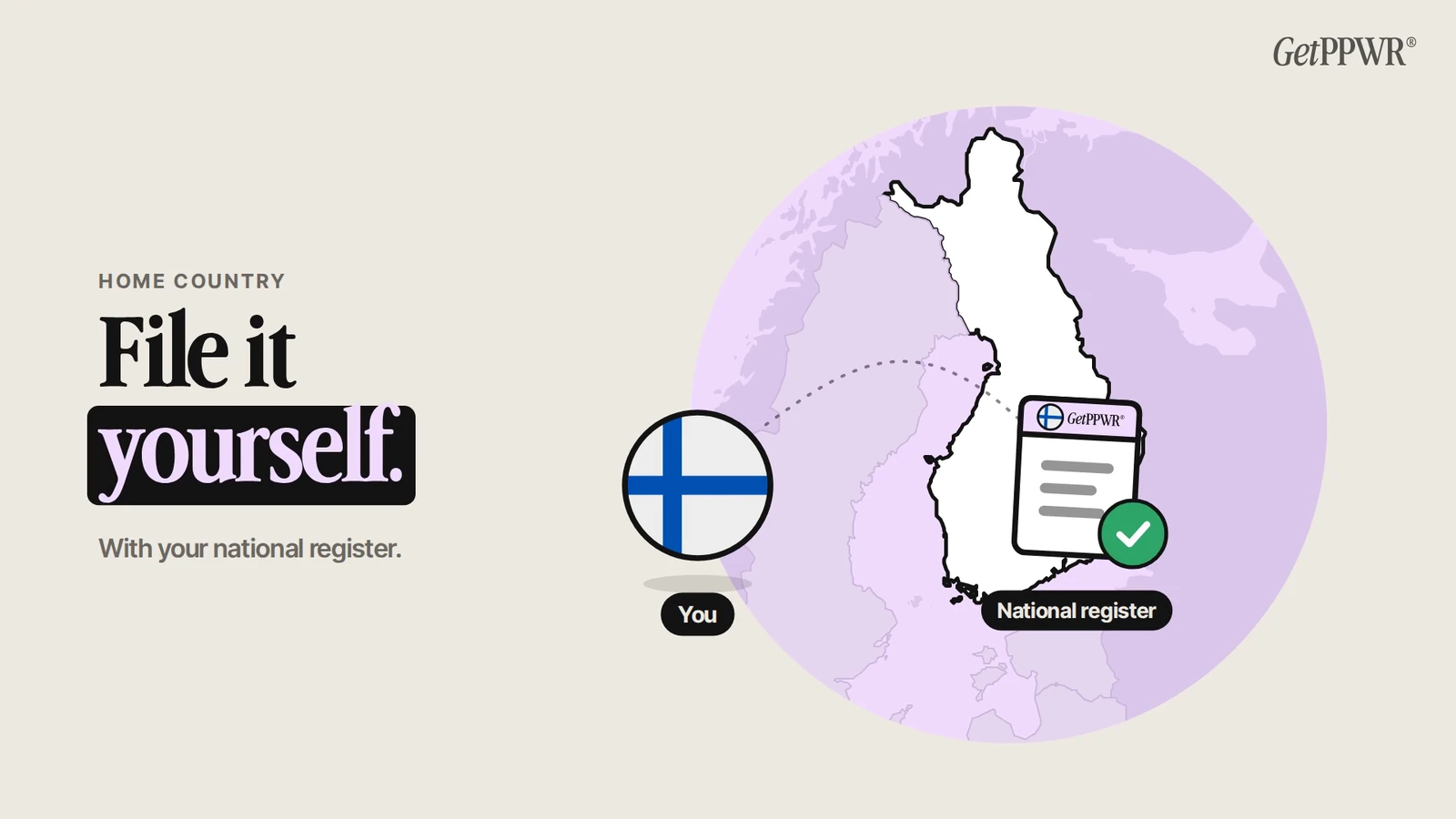
In the country where your business is established, you deal with the register directly. Nobody stands between you and the authority.
- You register in your country’s producer register and get a registration number.
- You report the packaging you put on that market, broken down by material.
- You pay the EPR fees, usually through a producer responsibility organisation that handles collection and recycling.
The register is the one your country already runs. In Germany that is LUCID, and we walk through it step by step in PPWR in Germany: LUCID registration. In Finland it is the producer register, held since the start of 2026 by the Licensing and Supervision Agency, which took the task over from the ELY Centres. Different names, same job.
Abroad, an authorised representative files for you
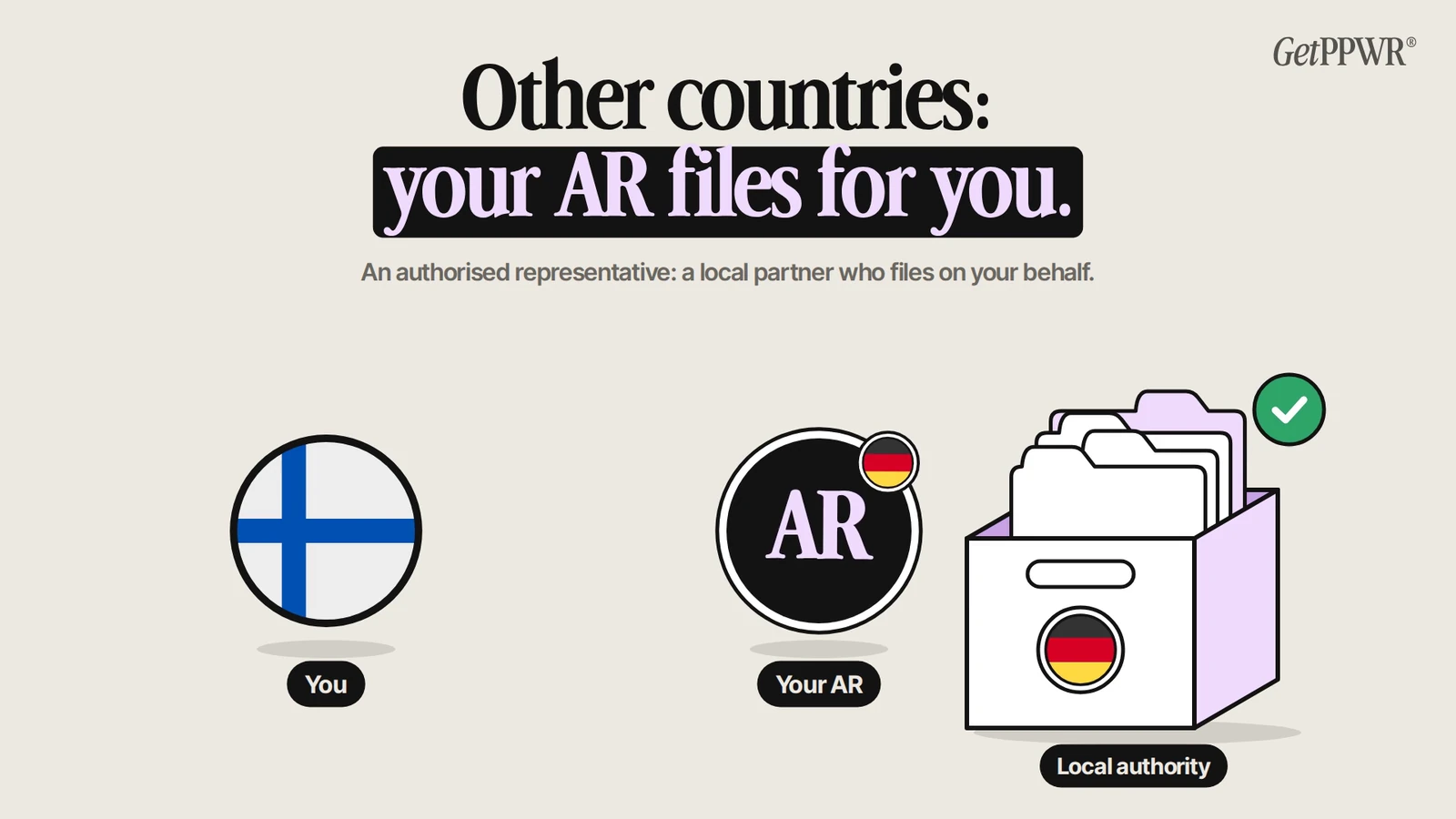
The moment you ship to a country where you have no establishment, you cannot simply register yourself. PPWR requires you to appoint, by written mandate, an authorised representative for extended producer responsibility in every member state where you make packaging available for the first time and are not established.
An AR is a local partner that takes on your EPR obligations in that country. In practice they do three things:
- Register you in that country’s producer register, in your name.
- File your reports there, on that country’s form and deadline.
- Handle the fees and the correspondence with the authority on your behalf.
The mandate is per country, not per company. Six countries means six mandates, though a compliance service can arrange several of them for you under one contract. Our friends at Lizenzero are one route to that.
If your company is outside the EU altogether, the same rule applies to every EU country you sell into, including the first one. There is no home market to file in.
An AR can only file what you give them
This is the part that catches stores out. Appointing an authorised representative does not move the data problem off your desk. It moves the filing. Your AR has no idea what you put in your parcels, and no way to find out.
No records, nothing to file. An AR can only report the numbers you hand them.
Two things have to come out of your own system, every month, for every market:
- The materials you use. Not the parcel weight, but grams of glass, cardboard, plastic, aluminium and paper, separately.
- Where you shipped them. The destination country of every order decides which report the packaging lands in.
Get those two right and the rest is paperwork, whether you file it or your AR does. Get them wrong and no representative in Europe can save the report.
Some countries let small volumes out, if you can prove it
A handful of countries set a small-volume threshold below which you do not have to register and report. Czechia is the clearest example. Under the Czech Packaging Act you fall outside the obligation only if you meet both conditions in the same calendar year:
- 300 kg of packaging or less placed on the Czech market, and
- annual turnover of CZK 25 million or less.
Three hundred kilos sounds generous until you convert it. At roughly 150 g of packaging per parcel, box and filling included, it is about 2,000 parcels a year to that one country. A store shipping forty parcels a week to Czechia is over the line by November.
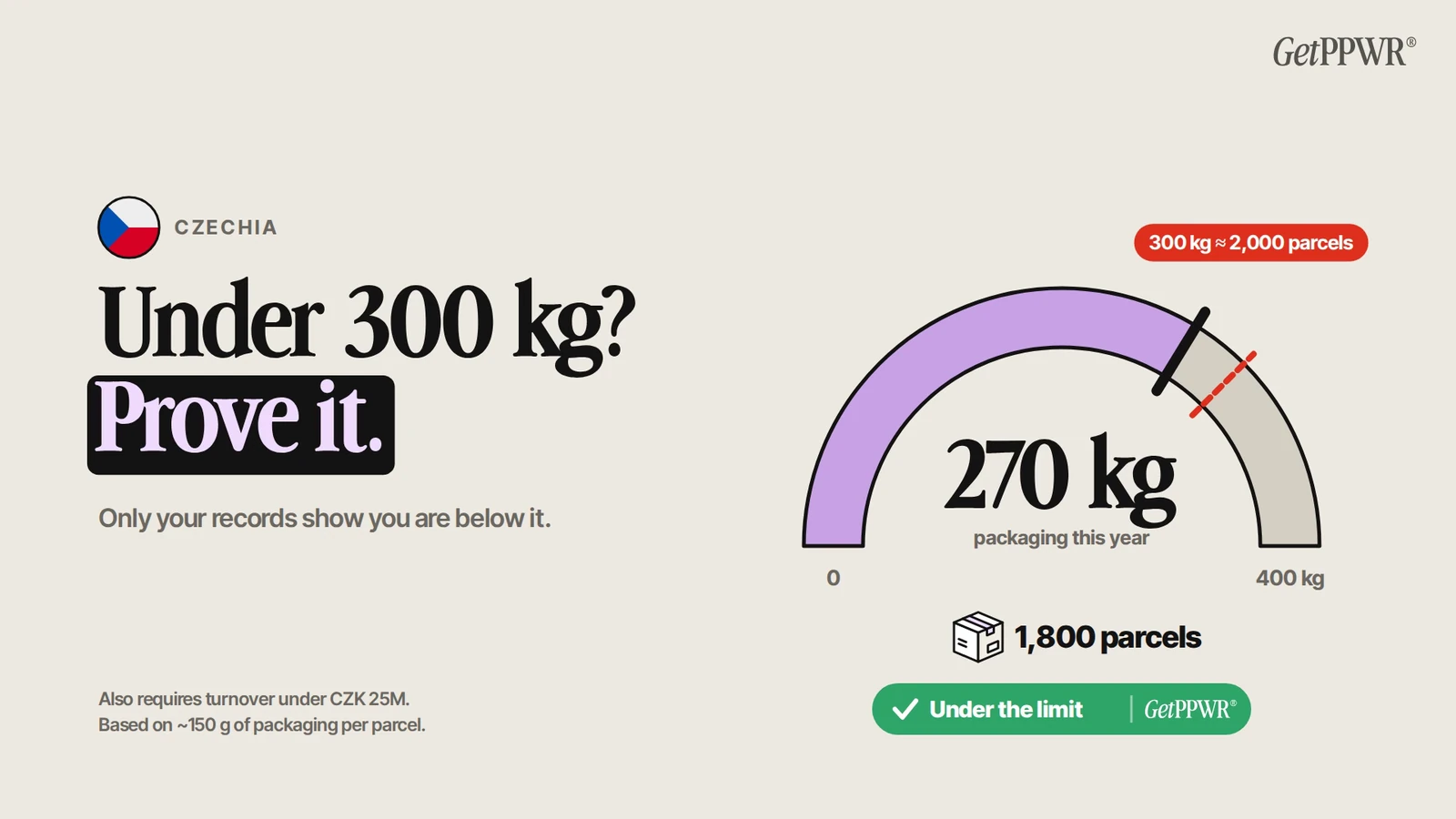
And an exemption is not a default. It is a claim, and the burden of proof sits with you. If an authority asks why you never registered, “we were under the limit” is only an answer if you can show the totals that prove it. Germany, by contrast, sets no threshold at all: one parcel to a German customer puts you in scope of the VerpackDG.
We go through them market by market in packaging EPR thresholds, country by country, including the four countries where a small seller can genuinely skip registering.
Where each report goes
| Where the order went | Who files | Where it lands |
|---|---|---|
| Your own country | You | Your national producer register, directly |
| Another EU country | Your authorised representative | That country’s register, on that country’s form |
| Any EU country, if you are established outside the EU | Your authorised representative | Each destination country’s register, separately |
| A country where you are under the threshold | Nobody, for now | Nowhere, but your records still have to prove it |
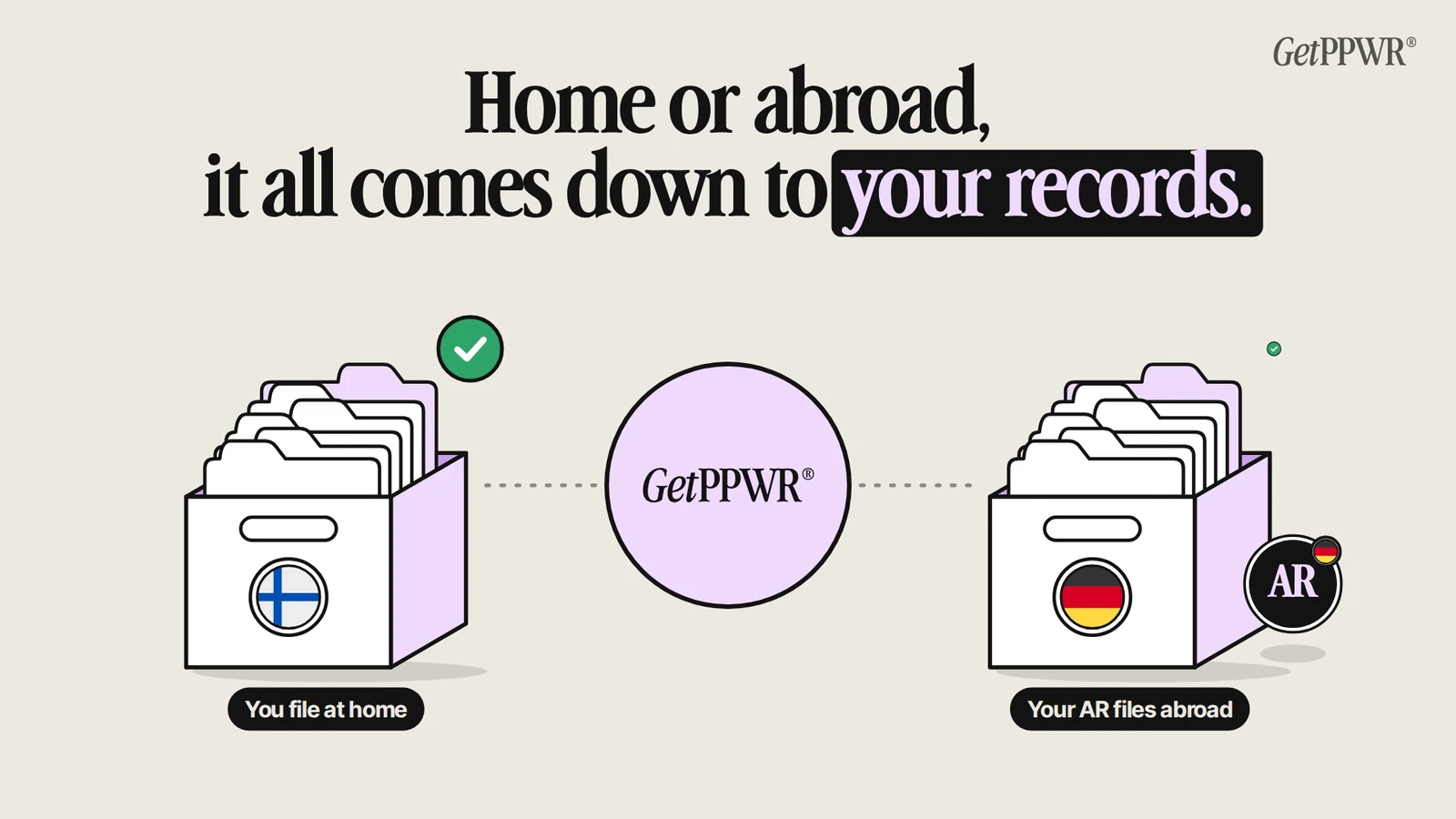
Home or abroad, it comes down to your records
The two halves look different on paper and are the same underneath. At home you file your own numbers. Abroad someone files them for you. Below a threshold nobody files them at all. In all three cases the thing being tested is whether you know, per material and per country, what you shipped.
That is the real PPWR obligation for an online store. The filing is the easy end. The record-keeping runs every day, on every order, in the background, and it is the only part that cannot be outsourced.
What GetPPWR does with this
You describe your packaging once with automations. After that GetPPWR reads every Shopify order and does the rest:
- Splits each order by material, product packaging and shipping packaging alike, in grams.
- Files it to the right country using the destination address, so one parcel never lands in two reports.
- Totals every material per country and tells you whether you are over or under that country’s limit.
- Writes the report in the format that country wants, for all 27 EU countries plus your home EPR report, including orders you have already shipped.
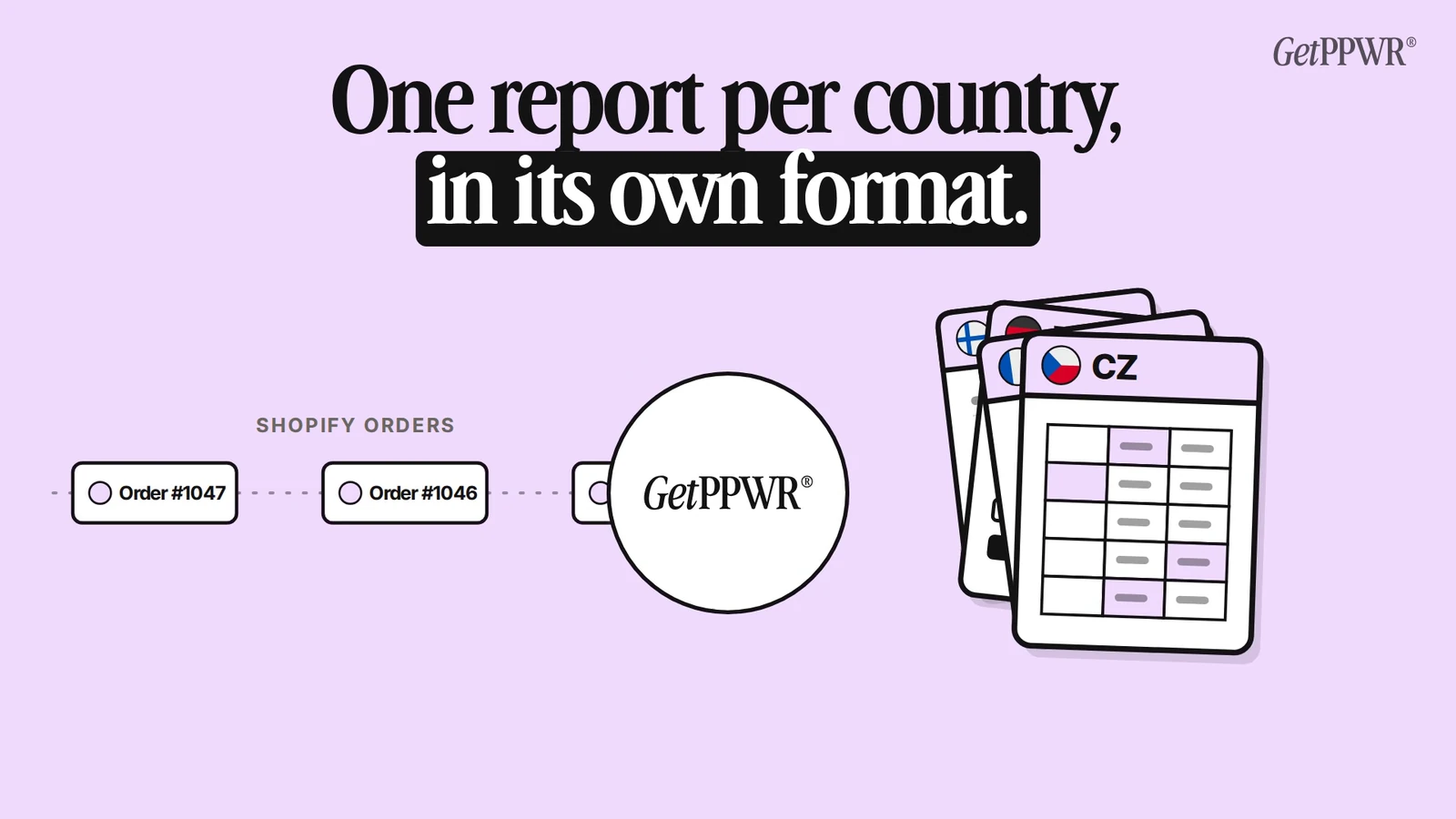
What comes out is ready to file yourself or hand straight to your authorised representative. Every plan starts with a 7-day free trial.
New to all this? Start with PPWR explained simply, or read what EPR actually means. Not sure which countries you are responsible in? Take the 2-minute quiz.
Sources: Regulation (EU) 2025/40, Articles 44 to 46 on the register of producers, extended producer responsibility and the authorised representative for EPR; Czech Act No. 477/2001 Coll. on Packaging; Germany’s Central Agency Packaging Register; the European Commission’s PPWR guidance.
Quick answers about PPWR reporting
Is there one EU-wide PPWR report?
No. PPWR is one regulation, but reporting is national. Each country you sell into collects its own report, on its own form and deadline.
Do I need an authorised representative?
You need one in every EU country where you make packaging available and have no establishment. In your own country you file directly instead.
Can one AR cover all 27 countries?
Not as a single mandate. The appointment is per member state. A compliance service can set up and manage several mandates for you under one contract, but legally they are separate.
Is an AR the same as a producer responsibility organisation?
No. An authorised representative registers and reports in your name. A producer responsibility organisation runs the collection and recycling system your fees pay for. You often deal with both.
Does an AR remove my responsibility?
It moves the filing, not the data. Your AR reports the figures you supply, so the obligation to know what you shipped, and in which materials, stays with you.
What if I am under a country’s threshold?
Then you do not register there, but you still need the totals that prove you were under it. Most EU countries set no threshold at all, so check the country list before you rely on one.
What happens if I do not report?
Penalties are national and must be in place across the EU by 12 February 2027. They range from fines to being barred from selling in that market. We cover them in PPWR fines.